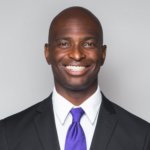
Six words have rung true throughout Bill Parcells’ life. From his early days in youth sports, to his high school and college years as a 6’2” athlete, “I’m here to help you succeed” were words Parcells heard time and again.
His coaches in high school sports and college football were basically teachers, Parcells recalls. Those coaches directed, guided and instructed him on the path to success and taught him what needed to be done to reach that success.
Parcells listened and took action.
When Parcells graduated in 1964 from the University of Wichita, now Wichita State University, he became an assistant coach at Hastings College, where those six words were his marching orders as a coach and a leader.
“At the very essence of when I started my professional life, I felt like I was a teacher,” Parcells remembered.
After then serving as an assistant coach at Wichita State, West Point, Florida State, Vanderbilt and Texas Tech, Parcells was named head coach at Air Force Academy in 1978 before joining the NFL the following year as the New York Giants’ defensive coordinator.
Coach Parcells’ storied career in the NFL eventually landed him in the Pro Football Hall of Fame, and his 23-year career in the NFL – 19 seasons as a head coach – is one for the history books. Beginning with his rise to prominence with two Super Bowl titles with the New York Giants, then leading the New England Patriots, New York Jets and Dallas Cowboys with two short retirements pitched in along the way, Parcells continued to live by those six words.
Throughout his career, “I’m here to help you succeed” was a driving force in Parcells’ role as a coach and leader. Of course, he encountered a few players along the way who couldn’t be influenced or taught what they needed to know. They weren’t self-starters or open to learning, putting in extra time and doing the necessary hard work. In those instances, Parcells felt that he was failing as a coach because, in his experience, part of teaching is motivating and encouraging.
“I gave every effort to allow [players] a chance to succeed,” Parcels reflected. He considered football and competition to be an endeavor he and the players undertook together, adding, “As players, I believe they deserved a chance to win. That’s the way I was taught.”
In managing players to perform at their highest potential, Coach Parcells looked for trigger points to fuel their interest and energize their diligence. When his tactics didn’t work, there were occasional confrontations in which he had to tell a player there was a problem. In many of those instances, “My expectations for that player were, maybe, greater than his,” Parcells recalled.
Among Coach Parcells’ many strong suits as a leader and teacher, he had a knack for getting players to respond to competition. He always searched for something in the opponent that would grab the attention of his players, make them wary of the opponent and create a degree of respect for what they’d face on the gridiron. Parcells also highlighted what the opponent had done the week before – something unique or above and beyond. Whether an opponent had played the prior week’s game in bad weather with no turnovers or enjoyed a big win on the road, Coach Parcells always used those tidbits as opportunities to emphasize that no one was going to hand his team a win. No, the team would have to earn it, and yes, he was there to help them succeed by responding to the competition.
Coach Parcells doesn’t lack for interesting – even funny – stories about getting his players to respond to competition. Several of his stories involved Lawrence “L.T.” Taylor, a linebacker who played under Parcells for the New York Giants and an NFL star widely considered to be the greatest defensive player in American football history.
Taylor was a dominant player who thrived on competition. After Los Angeles Rams lineman Irv Pankey had shutout Taylor earlier in the year, Parcells pulled out all the stops to prevent Taylor from being neutralized a second time. A plane ticket to New Orleans was placed on Taylor’s locker room stool. Parcells told him to fly there, trade helmets with Saints linebacker Pat Swilling, have Swilling keep his uniform on since they both wore #56, send Swilling to New York as Taylor’s stand-in and sack Pankey like he’d done in the Saints’ game against the Rams.
Coaching a dominant player who responds to competition also had its challenges because teams would copycat successful tactics that neutralized his dynamic players. Opponents consistently outnumbered Taylor, making it difficult, if not impossible, to stop the run and the pass. The Redskins used a back and a tackle to block Taylor and a tight end and a tackle for pass protection to keep Taylor from being a disruptive factor.
The press wanted to know, “what’s the matter with Taylor?” Despite Parcells’ best efforts to explain the Redskins’ two-man strategy against Taylor from the first play of the game to the last one, his words fell on deaf ears. They also fell on San Diego’s radar because the Chargers followed suit the following week, and the press again asked, “What’s the matter with Taylor?”
Fatigued by the shutouts and press inquiries, Parcells told Taylor within the team’s earshot that he was going to change the linebacker’s name to What’s The Matter With because that’s how every question about Taylor was prefaced. They shared a laugh the first few times Parcells mentioned the name change, but by Monday night’s game against the Minnesota Vikings, Taylor wasn’t laughing. Rather, he dictated the mood by competing at the highest level, finishing with nine tackles, two sacks, one fumble recovery, one forced fumble and knocking the quarterback out of the game. On their victory walk headed back to the locker room, Taylor jumped on Parcells’ back and proclaimed, “They’re not going to ask you what’s the matter with me tonight!”
The six words that served as the cornerstone of Parcells’ impressive career shined bright that night. They also paved the way for a strong bond between Parcells and many of his players. And while he and Taylor didn’t always see eye to eye and exchanged their fair share of cross words, by the time the first note of the National Anthem was played, Taylor was always side by side with the coach who was there to help him succeed.
As Parcells sees it, being a coach is a balancing act of talent, culture and fit. “You have to try and create an environment that allows synchronization, so to speak, and that is really what the culture is. You have to be willing to spend a lot of time to put that in place because it’s vital. Once you have it, you can’t replace it.” Players who had ongoing issues with behavior, selfishness, self-discipline, punctuality and greed were eventually categorized as NFU (not for us), regardless of talent, if they refused to change. Players who had favorable tangibles and good character but who simply weren’t a fit were labeled DNF (does not fit) because Coach Parcells constructed his team by finding the pieces that fit his roster.
Parcells also evaluated talent by looking beyond the obvious traits – run, jump, catch, throw – for other attributes that allowed his players to flourish. Determination. Toughness. Grit. Wherewithal. In a sport driven by analytical thinking, those valuable underlying attributes are often overlooked because they can’t be quantified. That’s a danger zone, in Parcells’ opinion, because a laser focus on algorithms and statistical analyses can cause teams to miss out on incredible players. And in his experience, Parcells believes those things determine the success or failure of a player – and a team.
Ray Lucas, a young player on Parcells’ 1999 Jets roster, had those underlying qualities. After an Achilles tendon injury benched starting quarterback Vinny Testaverde in the season opener, followed by a lackluster 1-6 record by his replacement, Coach Parcells went with his gut and put Lucas on the field as quarterback, a position he’d never played in a league game. What Lucas did have, however, was leadership, accountability and trustworthiness, and he led the Jets to an 8-8 record for the season.
It’s telling that this Hall of Fame coach considers an 8-8 finish to be his most triumphant season, but when put in the broader perspective of championing one’s life and being a great leader, this story exemplifies the importance of the journey.
Taylor and Lucas were true professionals who dug deep to win big. Parcells thinks the same will ring true as athletes adapt to empty stands with no fans amid the COVID-19 global pandemic. He firmly believes that “the real professional is going to find a way to perform regardless of the circumstances. It doesn’t matter whether anyone is looking or nobody is looking; he’s going to perform because that’s what’s ingrained in him to do.”
Parcells also was quick to note that while champions find a way to succeed, “Sometimes the situation won’t allow you to succeed.” In those instances, it becomes a function of performing as a player or leading as a coach to one’s full potential.
Until he coached the Cowboys, Parcells hadn’t reached his own full potential because he’d only been interested in playing football games, winning football games and swaying the best talent to his team.
Jerry Jones changed all that.
It was near the end of his career that Coach Parcells worked for who he calls “one of the most polarizing figures in all of sports.” Parcells spoke highly of Dallas Cowboys owner Jerry Jones as a man whose word meant something, who followed through on his commitments and who was an excellent communicator. He also recalled how Jones taught him about the business side of football because it was important for his team’s coach to see the big picture and understand the critical business issues associated with running a professional sports team.
Parcells used “enlightened” to describe how Jones’ leadership gave him a new perspective about sponsors, economics and growing a franchise. He also reflected on Jones’ good deeds behind the scenes. “Jerry is a benevolent guy who’s done some wonderful things that no one knows about. I’ve seen countless examples of that. His word was good, he was honest and forthright with me, and that’s just what I go by,” Parcells reflected.
It’s been 13 seasons since Parcells left his head coach position with the Dallas Cowboys and retired for the third time – and permanently – from the NFL. He did so as the only coach in the history of the NFL to lead four teams to the playoffs and three teams to a conference championship game. And don’t forget the two Super Bowl championship rings that reflect a stellar coaching career. Those accolades only partially reflect Parcells’ success, including his track record of success in coaching teams out of their periods of decline and leading them to tremendous success as commanding contenders.
Parcells’ impressive coaching tree includes four former assistant coaches who are currently head coaches in the NFL or college ranks and 13 who were previously in those same leadership roles. While Coach Parcells has unquestionably elevated the careers of many coaches and athletes throughout his impressive career, he’s unwavering in acknowledging the support he received along the way.
In his August 2013 Pro Football Hall of Fame enshrinement speech, Coach Parcells reflected on those who allowed him to succeed. “Every organization that I worked for supported me to the fullest, and I’m grateful to the ownership of those places, because that’s what allows you and the players to succeed and go forward and become champions. Without that, you’ve got no shot, but I was lucky to have that all the time.”
Whether on the giving end or receiving end, Parcells’ success in sports clearly has been fueled by the six words of his lifetime: “I’m here to help you succeed.”
And succeed, he did.
CLICK HERE